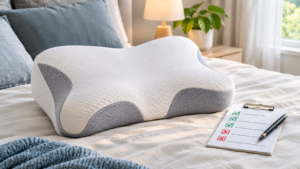

Choosing a pillow is not only about softness. Its height—often called loft—affects how your head and neck are positioned while you sleep. A pillow that is too high or too low may feel uncomfortable, while a suitable height helps keep your head aligned with the rest of your spine.
This guide explains how to think about pillow height for side, back and stomach sleeping, what to check before buying, and how to assess whether your current pillow is a good fit. Individual comfort varies, so use these points as a starting guide rather than a medical rule.
What Is Pillow Loft?
Pillow loft is the height of a pillow when it is resting under your head. You may see pillows described as low-, medium- or high-loft. Loft is not exactly the same as firmness: a pillow can be tall and soft, or relatively low and firm. The way a pillow compresses under your weight also changes the height you actually experience.
For that reason, look at both the pillow’s uncompressed dimensions and how much support it provides when you lie down.
Why Pillow Height Matters
Your pillow fills the space between your head and the mattress. That space changes with your sleeping position, shoulder width, body shape and mattress firmness. The aim is a comfortable, reasonably neutral head-and-neck position—not forcing your neck into a particular angle.
- Too high: your head may be pushed upward or sideways.
- Too low: your head may tilt toward the mattress, leaving too little support.
- Too soft: the pillow may compress more than expected during the night.
- Too firm: it may not contour comfortably to your head and neck.
Choosing Pillow Height by Sleeping Position
Side sleepers
Side sleeping usually leaves a larger gap between the head and mattress because of the shoulder. Many side sleepers therefore prefer a medium-to-higher loft that helps fill this space. Your shoulder width and mattress softness matter: a broader shoulder or firmer mattress may call for more height, while a softer mattress lets the shoulder sink and can reduce the gap.
When lying on your side, check that your head does not noticeably slope toward the mattress or get pushed upward. The pillow should support the space beneath your head without pressing uncomfortably against your shoulder.
Back sleepers
Back sleepers often find a low-to-medium loft more comfortable than a very tall pillow. A pillow that is too high can push the chin toward the chest; one that is too flat may not feel supportive. Look for a shape that supports the natural curve at the neck while allowing your head to rest comfortably.
Stomach sleepers
Stomach sleeping generally works better with a very low, soft pillow—or, for some people, no head pillow—because a thick pillow can increase the angle at which the neck turns. Comfort and breathing should always take priority. If this position regularly leaves you uncomfortable, consider discussing sleep-position options with a qualified healthcare professional.
Quick Pillow Loft Guide
| Sleep position | Common starting point | What to check |
|---|---|---|
| Side | Medium to high | Fills the shoulder-to-head gap without tilting the head |
| Back | Low to medium | Supports the neck without pushing the chin forward |
| Stomach | Very low or none | Avoids adding unnecessary height under the head |
| Combination | Adjustable or adaptable | Remains comfortable as you change positions |
These are broad starting points, not fixed measurements. There is no single pillow height that suits everyone.
How to Check Whether Your Pillow Is the Right Height
- Try your usual sleep position. Lie down on your normal mattress rather than testing the pillow while sitting upright.
- Notice your head angle. Your head should feel supported, not noticeably tipped up, down or sideways.
- Check shoulder pressure. The pillow should not force your shoulder into an awkward position.
- Allow for compression. A pillow that looks tall on a bed may flatten considerably under your head.
- Test it over several nights. If the pillow is returnable, follow the seller’s trial and hygiene conditions and assess comfort consistently.
Other Factors to Consider Before Buying
Mattress firmness
A softer mattress allows your shoulder and upper body to sink further, which can reduce the gap a pillow needs to fill. A firmer mattress may leave more space between your head and the surface.
Shoulder width and body shape
People with different shoulder widths can need different pillow heights even when they sleep in the same position. Use fit and comfort rather than a label alone.
Material and adjustability
Memory foam, latex, fibre and down-alternative fills behave differently. Some retain their shape; others compress or can be adjusted by adding or removing fill. Check care instructions, cover removability and return terms before ordering.
Shape and contour
Contoured pillows have shaped areas intended to cradle the head or support the neck. Their fit depends on your body and preferred position. A contour that feels comfortable to one sleeper may not suit another.
Does an Ergonomic Pillow Automatically Have the Right Height?
No. “Ergonomic” describes a design intention, not a guarantee of fit. Before choosing a contoured or memory-foam pillow, check its dimensions, height options, material, care guidance and return policy. If you are researching the Derila model, see our Derila pillow pros and cons guide and our overview of the Derila pillow and neck comfort claims. Those pages should be read alongside the manufacturer’s current product information.
Frequently Asked Questions
What pillow height is best for side sleepers?
Many side sleepers start with a medium-to-high loft to fill the space between the shoulder and head. The best fit depends on shoulder width, mattress firmness and how much the pillow compresses.
Should back sleepers use a high pillow?
Not necessarily. A low-to-medium loft is a common starting point. A pillow that is too tall may push the head forward, so check your comfort and head position while lying down.
Is a flat pillow better for stomach sleeping?
A very low pillow can reduce the amount of extra height beneath the head for stomach sleepers. Some prefer no head pillow, but personal comfort varies.
Can the wrong pillow height cause neck discomfort?
An unsuitable pillow may contribute to an uncomfortable sleeping position, but neck discomfort can have many causes. Persistent, severe or worsening symptoms should be discussed with a healthcare professional.
How often should I replace my pillow?
There is no universal replacement date. Consider replacing it when it no longer returns to shape, has lumps or permanent compression, is difficult to clean, or no longer feels supportive. Follow the manufacturer’s care advice.
Final Thoughts
The right pillow height depends on your sleep position, shoulder width, mattress and the way the pillow compresses. Start with the broad guidance in this article, then assess the fit while lying in your usual position. Prioritise comfort, check the product specifications and return policy, and avoid assuming that a particular loft or “ergonomic” label will work for every sleeper.
Disclosure: This website may contain affiliate links. If you purchase through qualifying links, we may earn a commission at no additional cost to you. This does not change the general guidance in this article.