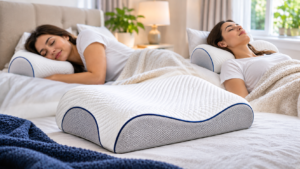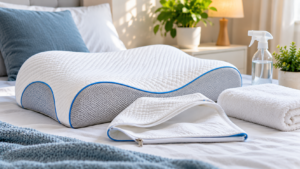
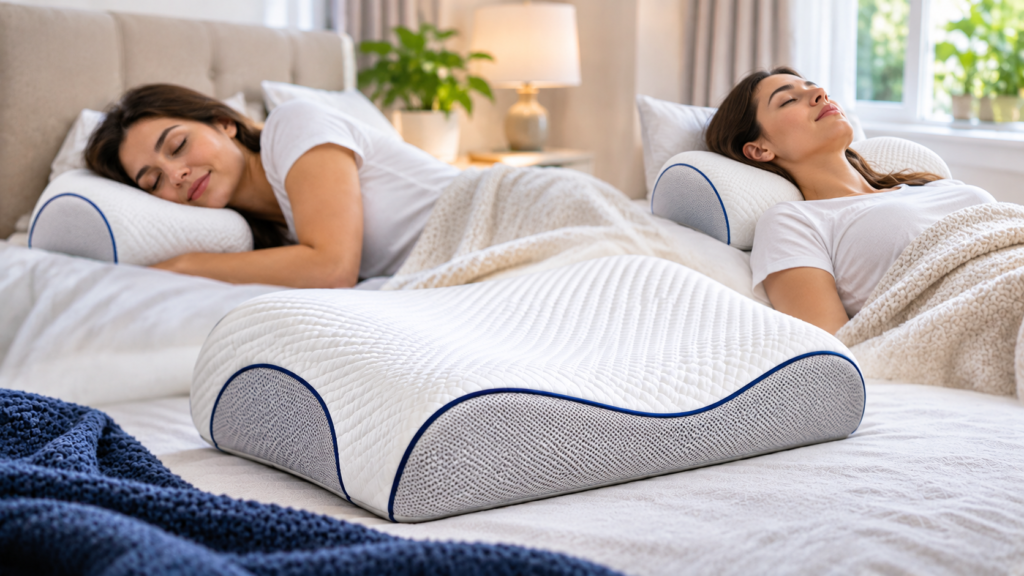
Combination sleepers move between two or more positions during the night, commonly shifting between their side and back. That can make pillow selection more complicated: a height and shape that feels comfortable in one position may feel too tall, too low or restrictive after you turn. If you are considering the Derila Ergo Pillow, evaluate how its contour and dimensions work across the positions you actually use.
This guide explains the main fit factors for combination sleepers, how to assess a contoured pillow without relying on marketing promises, and what to verify before buying in the United States. The exact Derila specifications can vary by listing or model, so check the current product details and care label before making a decision.
What Is a Combination Sleeper?
A combination sleeper regularly changes position instead of staying on their back, side or stomach throughout the night. Some people mainly alternate between back and side sleeping; others also spend time on their stomach. The more positions you use, the more important it is to consider whether a pillow remains comfortable when your head and shoulders move.
A pillow that feels suitable in one position is not automatically suitable in another. Your shoulder width, mattress firmness, head size and preferred pillow height all influence the fit.
Can a Contoured Pillow Work for Combination Sleepers?
A contoured pillow has a shaped surface rather than a uniform rectangular profile. Some sleepers like a defined contour, while others prefer a pillow they can bunch, fold or adjust. Whether the Derila pillow works for a combination sleeper depends on its actual dimensions, contour design, compression and the manufacturer’s recommended orientation.
Check the product listing for measured height, materials, firmness information and intended sleep positions. If the seller does not explain whether the specific model is intended for both side and back sleeping, ask for clarification before ordering. Do not assume that a product is suitable for every position simply because it is described as ergonomic.
Four Fit Factors to Check
1. Pillow height across positions
Side sleeping often requires enough loft to fill the space between the head and mattress created by the shoulder. Back sleeping commonly calls for a different feel and height. A pillow that is comfortable on your side may feel too high when you roll onto your back. Consider the contour’s different areas and whether the product instructions explain how to position your head in each posture.
2. Contour shape and orientation
Look at the shape of the centre and edges and read the manufacturer’s positioning instructions. If the pillow has a raised edge or a shaped neck area, check how that feature is intended to be used. Avoid forcing your head into a section that feels awkward or creates pressure.
3. Compression and firmness
The stated material and firmness can affect how much the pillow compresses under your head. A product photograph cannot tell you how it will feel in use. Review the material description and any available specifications, and remember that firmness labels are not standardised across all brands.
4. How easily you can change position
Notice whether the pillow remains comfortable when you turn naturally. A very defined shape may feel different when you move from your side to your back. If you find yourself repeatedly adjusting or moving away from the contour, the design may not match your preferences.
How to Test Pillow Fit as a Combination Sleeper
- Start with your usual mattress. Mattress firmness changes how far your shoulder and upper body settle into the bed.
- Check your main sleep positions. Try the positions you normally use, such as side and back, following the product’s instructions.
- Assess the head and neck feel. Notice whether the pillow feels too high, too low or comfortable without forcing a position.
- Turn naturally. See whether the contour remains comfortable when you change sides or roll onto your back.
- Review comfort over time. Do not continue using a pillow that causes persistent discomfort; check the seller’s return terms if it is unsuitable.
This is a practical comfort check, not a medical test or a guarantee of spinal alignment. If you have persistent pain, numbness, weakness or other concerning symptoms, seek advice from a qualified healthcare professional.
Derila Contoured Pillow vs. an Adjustable Pillow
| Consideration | Contoured pillow | Adjustable pillow |
|---|---|---|
| Shape | Pre-shaped profile; design varies by model | Often a more uniform shape with movable fill |
| Personalisation | Depends on the contour and available height options | Some models allow fill to be added or removed |
| Changing positions | Check whether the contour works in your main positions | Assess whether the adjusted loft suits your positions |
| Care | Follow the exact product care label | Care depends on fill and cover construction |
| Best fit | Depends on comfort, dimensions and preferred shape | Depends on comfort and how much adjustment is useful |
Neither type is automatically better for combination sleepers. A contoured design may appeal to someone who likes a defined surface; an adjustable pillow may appeal to someone who wants to change the loft. Compare the actual construction, not just the category name.
Common Signs the Pillow May Not Suit Your Sleep Style
- The pillow feels comfortable on your side but too tall on your back, or the reverse.
- You repeatedly reposition the pillow after changing positions.
- The contour creates pressure or feels restrictive when you turn.
- You need to fold or bunch the pillow to make it feel comfortable.
- You experience ongoing discomfort while using it.
These are reasons to reassess fit and product suitability, not signs of a specific medical condition. Follow the manufacturer’s instructions and consult a healthcare professional about persistent symptoms.
What US Shoppers Should Verify Before Buying
Before ordering in the United States, confirm the exact model name, dimensions, filling and cover materials, firmness description, and whether accessories are included. Review the seller’s identity and customer-service details, shipping charges, delivery estimate, and return or refund conditions. Check the final checkout amount and whether any promotional price requires a multi-item bundle.
Keep a copy of the product listing and order confirmation. Specifications, availability, offers and shipping terms can change, so verify them at the time of purchase rather than relying on an old advertisement or third-party summary.
Related Derila Pillow Guides
- Derila pillow fit considerations for side sleepers.
- Derila pillow fit considerations for back sleepers.
- What stomach sleepers should check before choosing the Derila pillow.
- How to choose pillow height for your sleep position.
- Derila pillow vs. regular pillow comparison.
- Read the Derila Ergo Pillow review and buying guide.
Frequently Asked Questions
What is a combination sleeper?
A combination sleeper changes between two or more sleeping positions during the night, often moving between side and back sleeping.
Is the Derila pillow suitable for side and back sleeping?
Suitability depends on the exact model’s height, contour, materials and positioning instructions. Check the current specifications and ask the seller if the intended sleep positions are not clearly stated.
Should combination sleepers choose a contoured or adjustable pillow?
It depends on personal preference. A contoured pillow provides a defined shape, while an adjustable pillow may let you change the fill or loft. Compare how each option fits your main sleeping positions.
Why does a pillow feel different when I roll onto my back?
Your head and shoulders rest differently in side and back positions, so the same pillow height can feel different. Mattress firmness and pillow compression also affect the experience.
Can a pillow prevent neck pain for combination sleepers?
A pillow should not be presented as a treatment or guaranteed way to prevent neck pain. If discomfort persists or worsens, consult a qualified healthcare professional.
Final Thoughts
Combination sleepers should look beyond a pillow’s marketing label and consider how its height, contour and compression feel in each position they use. The Derila pillow may suit some preferences, but the exact model specifications and individual fit matter. Check the product details, test the positions that are part of your normal routine, and review US delivery and return terms before buying.
Disclosure: This website may contain affiliate links. If you purchase through qualifying links, we may earn a commission at no additional cost to you. This does not affect the general information in this guide.