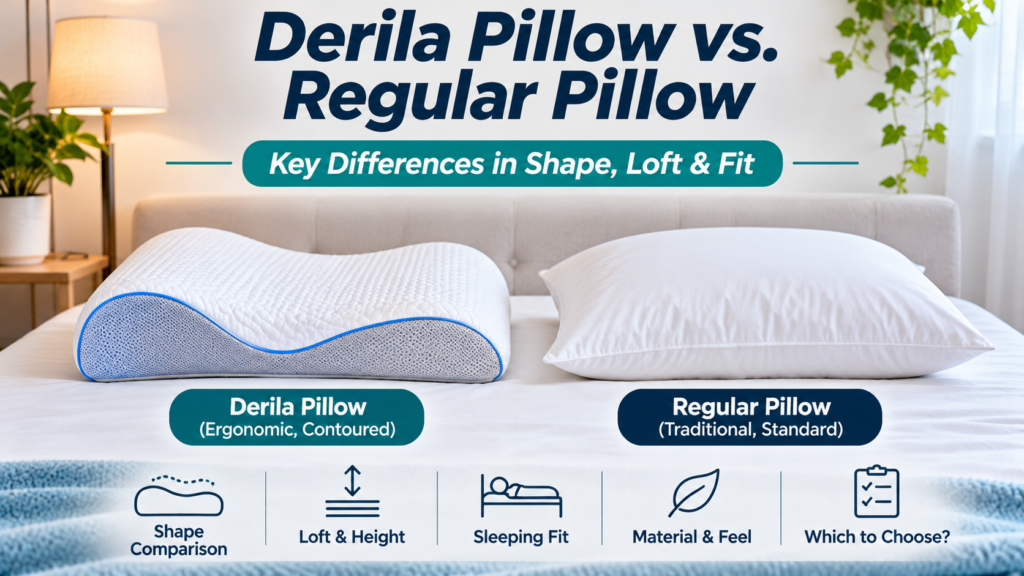
When comparing the Derila Ergo Pillow with a regular bed pillow, the biggest difference to investigate is shape. The Derila is marketed as an ergonomic, contoured pillow, while many traditional pillows have a more uniform rectangular shape. That difference may affect how each pillow feels, but it does not automatically make one option better for every sleeper.
This comparison guide looks at design, adjustability, pillow height, care and buying considerations. It focuses on what shoppers in the United States should verify before ordering. Product specifications, bundles and seller policies can change, so check the current listing for the exact model you are considering.
Derila Pillow vs. Regular Pillow: Key Differences
| Feature | Derila Ergo Pillow | Traditional pillow |
|---|---|---|
| Shape | Marketed with a contoured ergonomic shape; verify the current model design | Usually rectangular with a more uniform surface |
| Loft and height | Depends on the product’s contour and measurements | Varies by fill, construction and brand |
| Adjustability | Depends on whether the filling or construction can be adjusted | Some styles can be fluffed or adjusted; others cannot |
| Sleep-position fit | Check whether the contour and height suit your usual position | Choose a loft and firmness that suit your position |
| Care | Follow the product-specific care label | Care instructions vary by material and fill |
| Best for | People who prefer a defined, contoured pillow shape | People who prefer a familiar or potentially adjustable pillow shape |
1. Shape and Design
A contoured pillow has a shaped surface rather than the same height across the entire pillow. This style may appeal to sleepers who like a defined place for the head and neck. However, a fixed contour can feel unfamiliar if you are used to folding, bunching or reshaping a traditional pillow.
Traditional pillows come in many constructions, including down-alternative, fiberfill, latex and memory foam. Some are soft and compressible, while others have a firmer or more structured feel. Compare the actual construction rather than assuming all regular pillows are alike.
2. Pillow Height and Loft
Loft is the height of a pillow when it is in use. The right loft depends on shoulder width, head size, sleep position, mattress firmness and how much the pillow compresses. A side sleeper may need a different height from a back or stomach sleeper.
Before choosing the Derila, look for published dimensions and information about its contour. Compare those details with a pillow you already find comfortable. Our pillow height guide explains the main fit considerations for different sleeping positions.
3. Comfort and Personal Preference
Comfort is subjective. Some people prefer the more defined surface of a contoured pillow; others prefer a traditional pillow they can reposition or reshape. Consider whether you tend to move during the night, change sleeping positions, or prefer a soft surface that compresses easily.
Do not rely on broad claims that a particular pillow works for everyone. If you are trying a new shape, check the seller’s current trial and return terms before ordering, and stop using the pillow if it causes persistent discomfort.
4. Which Pillow Is Better for Side, Back or Stomach Sleepers?
Side sleepers
Side sleepers should pay close attention to the gap between the head and mattress. Shoulder width and mattress firmness influence the pillow height needed to keep the head from feeling pushed upward or dropping downward. Read our Derila pillow guide for side sleepers for a more detailed fit checklist.
Back sleepers
Back sleepers often prefer a pillow that feels supportive without pushing the head too far forward. Check how the pillow’s contour sits beneath your head and whether the height feels comfortable. The correct fit is personal and should not feel forced.
Stomach sleepers
Stomach sleepers may find some contoured or high-loft pillows too tall. If you mainly sleep on your stomach, compare the pillow’s height with a lower-profile option and consider whether the shape allows a comfortable position.
5. Care and Maintenance
Care depends on the materials and construction. Check whether the cover is removable, whether it can be machine-washed, and whether the pillow itself must be spot-cleaned. Never assume the foam or filling can be washed or tumble-dried. Follow the care label supplied with the exact product.
For replacement cover considerations, see our Derila pillowcase size, fit and care guide.
What Should US Buyers Check Before Ordering?
- Exact product model: Make sure the listing describes the same Derila version you intend to buy.
- Dimensions and materials: Look for measurements, fill or foam details, cover composition and care instructions.
- Final checkout price: Confirm the currency, shipping fees, taxes where applicable and any bundle requirements.
- Seller identity: Check the business name, contact details and whether you are buying from the manufacturer or a third-party seller.
- Shipping and returns: Read delivery estimates, return windows, hygiene exclusions and refund conditions before purchase.
- Promotional terms: Verify whether discounts apply automatically or require a particular quantity or offer code.
Keep your order confirmation and a copy of the terms shown at checkout. Offers and policies can change, so use the current seller information rather than relying on old advertisements or third-party summaries.
Frequently Asked Questions
Is the Derila pillow better than a regular pillow?
Not for everyone. The Derila is marketed as a contoured pillow, while traditional pillows come in many shapes and materials. The better option depends on your preferred feel, sleep position, pillow height and individual comfort.
Can I use a regular pillowcase on the Derila pillow?
Fit depends on the pillow’s dimensions and contour. Check the exact measurements and look for a cover confirmed as compatible with your model. A standard rectangular case may bunch or fit poorly.
Is a contoured pillow suitable for every sleeping position?
No single design suits every sleeper. Side, back and stomach sleepers may have different loft and shape preferences. Check the product dimensions and assess comfort in your usual position.
Does an ergonomic pillow treat neck pain?
A pillow is a bedding product, not a medical treatment. It may influence comfort during sleep, but it should not be claimed to diagnose, prevent or treat a medical condition. Seek professional advice for persistent or worsening symptoms.
What matters most when comparing pillows?
Focus on dimensions, loft, materials, firmness, adjustability, care requirements and return terms. A clear specification sheet is more useful than vague marketing descriptions.
Final Verdict: Derila or a Traditional Pillow?
The Derila Ergo Pillow may appeal to shoppers who prefer a defined contoured shape. A traditional pillow may be a better match for people who prefer a familiar rectangular design or an adjustable fill. Neither is universally best. Compare the actual product details with your sleep position and comfort preferences, and review the seller’s current US shipping and return terms before deciding.
For more detail, read our Derila Ergo Pillow review and Derila pillow pros and cons guide.
Disclosure: This website may contain affiliate links. If you purchase through qualifying links, we may earn a commission at no additional cost to you. This does not affect the general information in this guide.