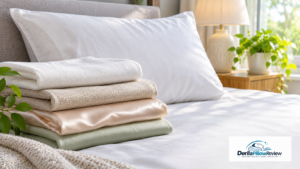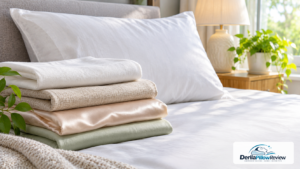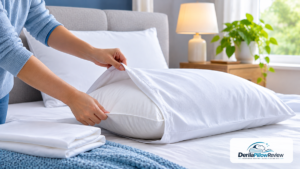
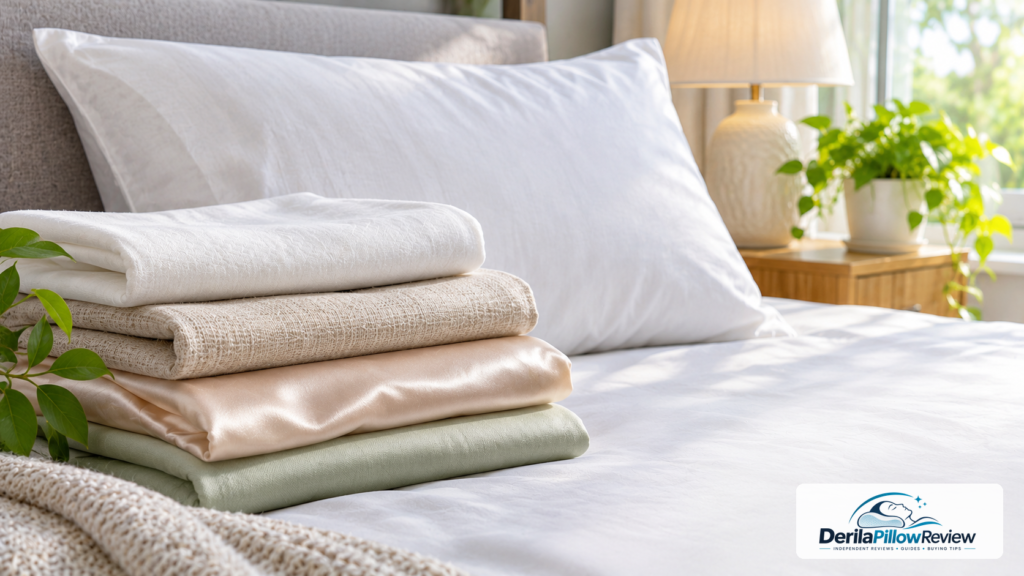
The fabric of a pillowcase affects how it feels against your skin, how much care it needs and how it performs through regular washing. Cotton, linen, silk, satin and bamboo-derived viscose are common options, but they are not interchangeable. Each has different characteristics, and the best choice depends on your comfort preferences, budget and laundry routine.
This guide compares popular pillowcase materials for shoppers in the United States. It explains what to look for, how to compare fabric claims and how to choose a cover that fits your pillow—including contoured and ergonomic designs.
What Are the Most Common Pillowcase Materials?
Pillowcases are made from natural fibres, manufactured fibres and blends. The fibre is only one part of the product: weave, yarn quality, fabric weight, finishing and construction also influence texture and durability. Read the full product description rather than choosing by a material name alone.
Cotton Pillowcases
Cotton is a widely available pillowcase material. It comes in different weaves, including percale and sateen, which can feel noticeably different. Percale is commonly associated with a crisp, matte feel, while sateen has a smoother surface and a slight sheen.
What to consider
- Available in a broad range of prices, colours and thread constructions.
- Care instructions vary by weave, dye and finishing.
- May wrinkle or shrink if washed or dried contrary to the label.
- Thread count alone does not describe overall fabric quality or feel.
Cotton can be a practical everyday option if you want broad availability and straightforward bedding choices. Compare the weave and fabric details, not only the thread-count number.
Linen Pillowcases
Linen is commonly made from flax fibres and is known for its distinctive texture. It often has a relaxed, slightly textured appearance and may soften with use and washing when cared for correctly.
What to consider
- Has a natural, textured look that suits relaxed bedding styles.
- Can wrinkle more visibly than some other fabrics.
- May have a higher purchase price than basic cotton options.
- Care and shrinkage depend on the product’s construction and finishing.
Choose linen if you like its texture and appearance and are comfortable following its specific laundry requirements. Check whether the item is 100% linen or a blend.
Silk Pillowcases
Silk is a natural protein fibre with a smooth surface and a distinctive drape. Silk pillowcases are often marketed as a premium bedding option. Their feel and care requirements can differ from cotton or linen, and the product’s fibre content and grade matter.
What to consider
- Often requires more careful laundering than everyday cotton.
- Can be more expensive, especially when the listing specifies high-quality mulberry silk.
- Check whether the product is genuine silk or a synthetic satin fabric.
- Follow the label for washing, drying, ironing and storage.
Do not assume that every smooth, shiny pillowcase is silk. Satin describes a weave or finish, not a fibre by itself. A satin pillowcase may be made from polyester or another material.
Satin Pillowcases
Satin refers to a fabric construction that creates a smooth, lustrous surface. Satin pillowcases are commonly made from polyester, although other fibres can also be used. Their price and care requirements depend on the fibre and construction.
What to consider
- Can offer a smooth feel at a range of price points.
- May be easier to find at lower prices than natural silk.
- Polyester satin and silk satin are different products.
- Check the label for fibre content, washing instructions and heat limits.
If a listing uses the words “silky satin,” verify the actual fibre composition before buying. A description of the surface feel is not proof that the product contains silk.
Bamboo-Derived Viscose Pillowcases
Some pillowcases are made from viscose or rayon produced using bamboo as the raw material. These fabrics are often described as bamboo fabric in retail listings. The manufacturing process and final fibre are important, so look for precise fibre-content information on the label.
What to consider
- Can have a smooth, soft hand feel depending on the fabric construction.
- Care instructions vary; some products require gentle washing.
- Check whether the product is viscose, rayon, lyocell or a blend.
- Be cautious of broad environmental or performance claims that are not supported with details.
Do not assume that a bamboo-derived fabric has the same properties as raw bamboo or that every product has identical environmental credentials. Check the exact fibre name and any supporting certifications.
Pillowcase Materials Compared
| Material | Typical feel or look | What to check |
|---|---|---|
| Cotton | Varies from crisp percale to smooth sateen | Weave, fibre content, shrinkage and wash instructions |
| Linen | Textured, relaxed appearance | Fibre content, fabric weight and care requirements |
| Silk | Smooth, fluid and lustrous | Genuine silk content, grade and delicate-care instructions |
| Polyester satin | Smooth surface with sheen | Polyester content, heat limits and construction |
| Bamboo-derived viscose | Often smooth and soft to the touch | Exact fibre name, blend and laundering directions |
There is no single best material for everyone. Fabric quality, weave, fit and personal preference can matter as much as the fibre category.
How to Choose the Right Pillowcase Material
Start with the feel you prefer
Think about whether you prefer a crisp, textured, smooth or silky surface. If possible, feel a fabric sample or buy from a retailer with a clear return policy. Online descriptions can help, but terms such as “cooling,” “luxury” and “ultra-soft” are not standardised performance measurements.
Check the care routine
Consider how much time you want to spend on laundry. Some pillowcases can be washed with a regular bedding load, while delicate fabrics may need a gentler cycle or special handling. Follow the sewn-in label rather than assuming all products of one material can be washed in the same way.
Compare construction and fibre content
Look for the percentage of each fibre, weave, stitching, closure and fabric weight where provided. For cotton, compare percale and sateen construction. For satin, identify the fibre used. For silk, check that the listing clearly states silk content.
Choose the correct size and shape
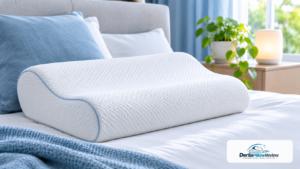
A pillowcase should fit without pulling the pillow out of shape or leaving excess fabric that bunches up. Standard, queen and king labels are useful, but compare the actual dimensions. Contoured pillows may need a model-specific cover. See our US pillow sizes guide and Derila pillowcase fit guide.
Review price and return terms
Compare the price with the fibre content, construction and number of pillowcases included. Check shipping, return conditions and any hygiene-related restrictions before opening the package.
How to Care for Different Pillowcase Fabrics
- Cotton: Follow the label for water temperature and drying. Avoid excessive heat if shrinkage is a concern.
- Linen: Use the recommended cycle and drying method; remove promptly if you want to reduce creasing.
- Silk: Use only the hand-wash or delicate method specified by the manufacturer, and avoid unsuitable detergents or heat.
- Satin: Check the fibre content first. Polyester satin and silk satin may have different care needs.
- Bamboo-derived viscose: Follow the product label carefully; some fabrics may be sensitive to heat or aggressive washing.
For a regular cleaning schedule, read our guide on how often to wash a pillowcase. If you use a protector underneath, see pillow protector vs. pillowcase.
Common Pillowcase Buying Mistakes
- Assuming satin always means silk.
- Choosing by thread count alone without checking weave and fibre content.
- Ignoring care instructions and then damaging the fabric during washing.
- Buying by size label without checking actual dimensions.
- Assuming all bamboo-labelled products use the same fibre or manufacturing process.
- Taking unverified claims such as “hypoallergenic” or “cooling” as guaranteed results.
Frequently Asked Questions
What is the best material for a pillowcase?
There is no universal best choice. Cotton, linen, silk, satin and bamboo-derived viscose have different feels, prices and care requirements. Choose based on your preferences, the product’s construction and its care label.
Is satin the same as silk?
No. Satin describes a weave or fabric construction, while silk is a natural fibre. Satin pillowcases may be made from polyester or other fibres, so check the composition label.
Are cotton percale and cotton sateen different?
Yes. They are different cotton weave constructions and often have different surface feels. Percale is generally crisp and matte, while sateen is typically smoother with a subtle sheen.
Are bamboo pillowcases really made from bamboo?
Retail products labelled bamboo are often made from bamboo-derived viscose or rayon. Check the fibre content on the product label to understand what the finished fabric contains.
Can I use a regular pillowcase on a contoured pillow?
Only if it fits without bunching or distorting the pillow’s shape. Many contoured pillows need a cover designed for their dimensions and profile.
Final Thoughts
Cotton, linen, silk, satin and bamboo-derived viscose each offer different textures, price points and care requirements. Compare the actual fibre content, weave, dimensions and laundry instructions instead of relying on marketing labels alone. The right pillowcase is one that fits your pillow, feels comfortable to you and can be cared for properly.
Disclosure: This website may contain affiliate links. If you purchase through qualifying links, we may earn a commission at no additional cost to you. This does not affect the general information in this guide.