
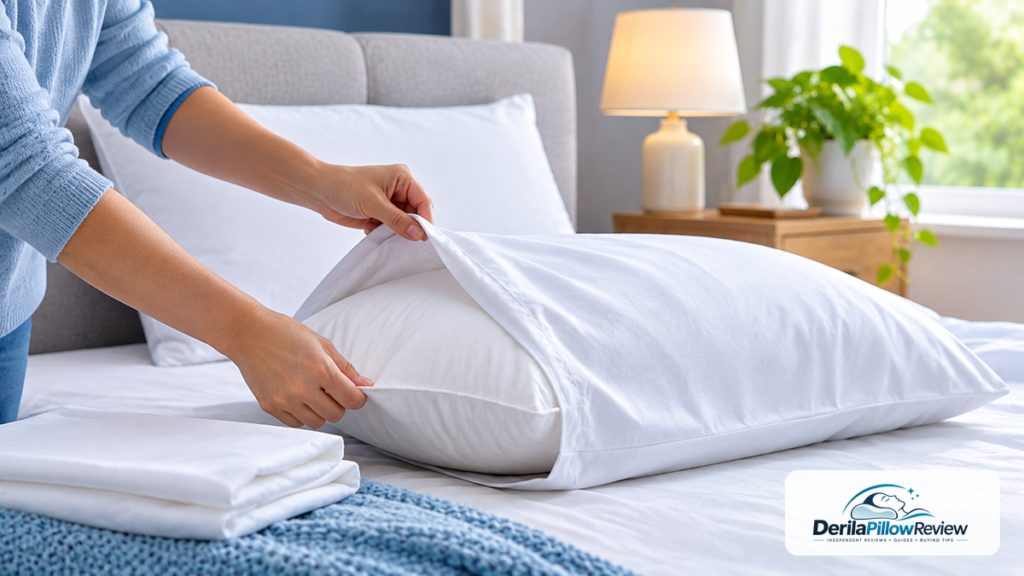
Your pillowcase is the bedding layer that has the most direct contact with your face and hair, so it needs regular cleaning. The right washing routine depends on how often you use it, whether you sweat at night, your skin and hair care routine, and the fabric’s care instructions. A consistent schedule helps keep bedding fresh and prevents oils, perspiration and everyday residue from building up.
This guide covers how often to wash a pillowcase, when to change it more frequently, how to wash different fabrics and how to care for covers used with contoured or ergonomic pillows. Always follow the care label for your specific product.
How Often Should You Wash a Pillowcase?
For everyday use, a practical routine is to change and wash your pillowcase about once a week. You may prefer to change it more often—such as every two or three days—if you sweat heavily, use hair products, have been ill, or notice visible dirt or residue. The best schedule is one you can maintain consistently while following the fabric’s washing instructions.
A pillowcase is different from the pillow insert and from a pillow protector. The pillowcase is the outer layer that touches your skin; a protector sits underneath it and helps shield the pillow itself. Read our pillow protector vs. pillowcase guide for a comparison.
When Should You Change Your Pillowcase More Often?
- After heavy sweating: Change it sooner if the fabric feels damp or has noticeable perspiration residue.
- After being sick: Use clean bedding regularly during recovery and follow normal laundry hygiene practices.
- After applying hair products: Oils, gels and leave-in products can transfer to the fabric.
- If you use skin creams: Some moisturisers and skincare products can leave marks or residue.
- When it looks or smells unclean: Do not wait for the next scheduled laundry day if the case needs washing.
- During hot weather: If you perspire more, you may want to change the case more frequently.
These are practical hygiene considerations, not medical rules. If you have a skin condition or a clinician has recommended a specific laundry routine, follow their advice.
How to Wash a Pillowcase Correctly
- Check the care label. Confirm the recommended water temperature, cycle, detergent and drying method.
- Separate by colour and fabric. Wash light and dark colours separately when needed, and avoid mixing delicate fabrics with rough items.
- Pre-treat visible marks. Use a fabric-safe stain treatment according to its instructions; test an inconspicuous area if necessary.
- Use an appropriate detergent amount. Follow the detergent label and avoid overloading the washer.
- Select the permitted wash cycle. Use the setting recommended for the pillowcase material.
- Dry it completely. Follow the label’s drying guidance and make sure the case is fully dry before putting it back on the pillow.
Do not use bleach, fabric softener, high heat or strong stain removers unless the care label permits them. Incorrect washing can shrink fabric, damage fibres or affect special finishes.
Washing Different Pillowcase Fabrics
| Fabric | What to consider | Care reminder |
|---|---|---|
| Cotton | Common, easy-care option; weave and finish can affect feel | Use the temperature and drying method on the label |
| Polyester or blends | May dry relatively quickly; heat tolerance varies | Avoid excessive heat unless permitted |
| Linen | Natural texture that may soften with use | Follow guidance for washing and shrinkage |
| Silk or satin | Delicate fibres or finishes may need gentler care | Use only the specified delicate or hand-wash method |
| Bamboo-derived viscose | Care requirements vary by fibre blend and construction | Check the label; avoid assuming all products are machine washable |
Fabric names alone do not determine the correct wash method. Fibre blends, dyes, stitching, zippers and special finishes can change the instructions, so use the label attached to your pillowcase.
What About a Contoured or Ergonomic Pillow Cover?
Contoured pillows often use a shaped cover that is designed to fit raised edges and a curved centre. Some covers are removable and washable; others may have specific restrictions. Before removing the cover, check the product instructions and note how it is positioned so you can put it back correctly.
Do not assume the foam insert can be washed just because its cover can be removed. Many foam cores should not be soaked or machine washed. For product-specific guidance, see our guide to cleaning a Derila pillow and our Derila pillowcase size, fit and care guide.
How Often Should You Wash a Pillow Protector?
A pillow protector sits beneath the pillowcase, so it generally does not need changing as often as the outer case. Its washing frequency depends on use, material, spills and the manufacturer’s care recommendations. Wash it promptly if it becomes soiled, and make sure it is completely dry before placing it back on the pillow.
Some protectors contain a waterproof or protective membrane that can be damaged by high heat, bleach or fabric softener. Check the product label before washing or drying it.
Simple Pillowcase Laundry Routine
- Keep at least one clean spare pillowcase for each pillow.
- Choose a regular weekly laundry day as a reminder.
- Change the case sooner after heavy sweating, illness or visible soiling.
- Wash pillowcases separately from items that may snag delicate fabric.
- Store clean, fully dry cases in a dry cupboard.
- Inspect seams, closures and fabric for wear when laundering.
Frequently Asked Questions
Is washing a pillowcase once a week enough?
For many people, changing it weekly is a practical routine. You may need to wash it more often if you sweat heavily, use hair products, have been ill or notice visible residue.
Can I wash my pillowcase with bedsheets?
Usually, if the fabrics have compatible care instructions and colours. Separate delicate materials and follow the labels to avoid damage.
Should I wash a new pillowcase before using it?
Check the manufacturer’s instructions. Washing before first use can remove packaging or handling residue, but some delicate fabrics have special first-wash requirements.
Can I use hot water for every pillowcase?
No. The suitable temperature depends on the fabric, dye, stitching and care instructions. Use the temperature stated on the label.
Is a pillow protector a replacement for a clean pillowcase?
No. A protector sits under the pillowcase and serves a different purpose. The outer pillowcase should still be changed and washed regularly.
Final Thoughts
A weekly pillowcase change is a simple starting point for keeping your bedding fresh. Change it sooner when it becomes damp or visibly soiled, and choose a wash method that suits the fabric. If you use a contoured pillow, check the cover and insert instructions separately—removable covers and foam cores often require different care.
Disclosure: This website may contain affiliate links. If you purchase through qualifying links, we may earn a commission at no additional cost to you. This does not affect the general information in this guide.