
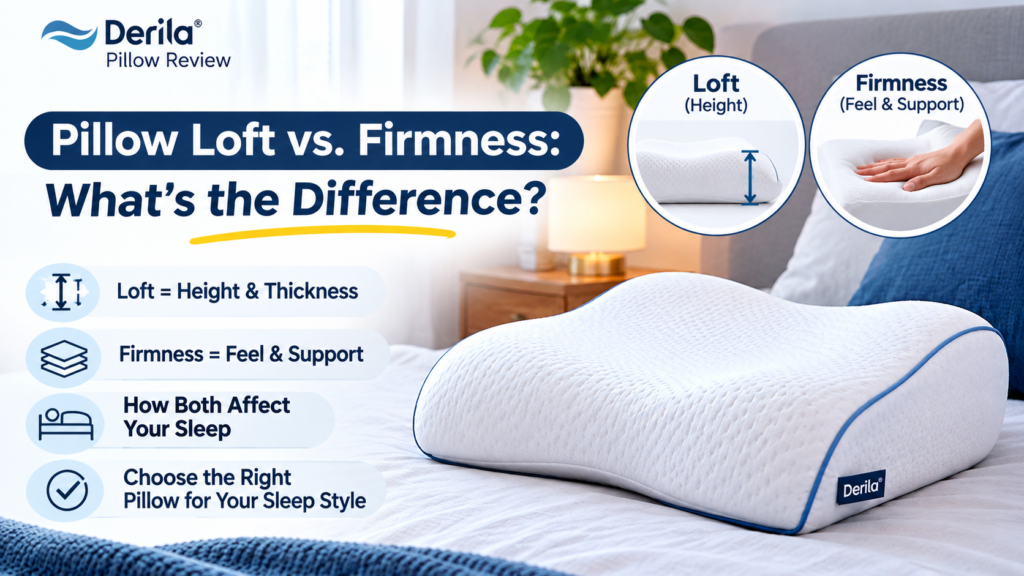
Pillow loft is the height of a pillow, but the number printed in a product listing does not always tell you how tall it will feel once you lie down. Filling, construction and pressure from your head can change the pillow’s profile. Measuring loft at home and understanding how it differs from firmness can help you compare pillows more carefully.
This guide explains how to measure pillow loft, how to think about compression, and how to assess whether a pillow’s height suits your sleeping position. It is a practical buying guide for US shoppers; it is not a medical assessment or a guarantee of pain relief.
What Does Pillow Loft Mean?
Loft is the height or thickness of a pillow. A low-loft pillow has a slimmer profile, while a high-loft pillow is thicker. Some manufacturers provide a height measurement, but measurement methods may differ and a pillow’s shape may make a single number incomplete.
Loft is not the same as firmness. Firmness describes how much the pillow resists pressure. A pillow can have a high uncompressed loft and still compress substantially when used. For a fuller explanation, read our pillow loft vs. firmness guide.
What You Need to Measure Pillow Loft
- A ruler or tape measure with inch and/or centimetre markings.
- A flat, level surface such as a table or firm mattress.
- The pillow in its normal, unused condition.
- A notebook or phone to record measurements and the measurement method.
If the pillow has a contoured shape, measure more than one area. The centre, raised edges and neck-support area may have different heights.
How to Measure Pillow Loft at Home
- Place the pillow on a flat surface. Let it settle into its natural shape. Do not fold, squeeze or lean on it.
- Identify the measurement points. For a rectangular pillow, measure the centre and, if useful, the edges. For a contoured pillow, record the height of the centre and each raised section separately.
- Hold the ruler vertically. Measure from the flat surface to the highest point without pressing down on the filling.
- Record the result. Note the measurement in inches or centimetres and identify exactly where it was taken.
- Repeat the measurement. Take a second reading to reduce errors caused by an uneven surface or a shifting pillow.
- Describe the method. Record whether the pillow was measured without pressure. This makes comparisons more meaningful.
This method measures uncompressed loft only. It does not measure the height that remains under the weight of your head. Manufacturers may use different testing methods, so compare measurements only when the method is clear.
Why Compressed Height Also Matters
When you rest your head on a pillow, the filling may compress. The amount of compression depends on the material, density, construction, temperature and applied pressure. A pillow with a larger uncompressed measurement may settle lower than a firmer pillow with a smaller starting height.
There is no simple home measurement that reproduces every sleeper’s experience. Your head weight, position, mattress and shoulder width all affect the way a pillow feels. If a manufacturer provides a compression or load test, review how that test was performed before comparing it with another product.
How to Assess Pillow Loft for Your Sleeping Position
Side sleepers
Side sleepers often compare pillows that fill the space between the head and mattress created by the shoulder. The required loft varies with shoulder width, body proportions, mattress firmness and pillow compression. Read our side-sleeper pillow fit guide for more considerations.
Back sleepers
Back sleepers may prefer a profile that feels comfortable without pushing the head noticeably forward. Compare the pillow’s height and how much it compresses on your usual mattress. Our back-sleeper fit guide covers additional factors.
Stomach sleepers
Stomach sleepers often look at lower-profile pillows because a thick pillow may raise the head while it is turned to one side. Individual comfort varies, so consider the actual loft and how the pillow feels in your normal position.
Combination sleepers
If you move between side and back sleeping, assess whether the pillow remains comfortable in both positions. A height that feels suitable on your side may feel too tall on your back. Shape and compression matter as well as the initial measurement.
Common Loft Measurement Mistakes
- Pressing down while measuring: This changes the height and makes the result difficult to compare.
- Measuring only the highest point: Contoured pillows may have several different height zones.
- Comparing different methods: Uncompressed loft and loaded/compressed height are not equivalent.
- Ignoring the mattress: Mattress firmness changes how the shoulder and upper body settle.
- Treating loft as firmness: Height alone does not tell you how much a pillow will compress.
- Assuming one measurement suits everyone: Body proportions and sleep positions affect personal fit.
What to Check in a Pillow Product Listing
Before buying, look for the pillow’s dimensions, stated loft, filling composition, cover fabric, firmness description and care instructions. Check whether the pillow is adjustable and whether the seller explains how measurements were taken. If the product is contoured, look for a diagram or measurements for its different zones.
For US orders, also confirm the seller’s identity, shipping charges, estimated delivery window, return conditions and final checkout price. Promotional bundles and availability can change, so verify the current terms before paying.
Frequently Asked Questions
How do I measure pillow loft?
Place the pillow on a flat surface and measure vertically from the surface to the top without compressing it. For a contoured pillow, measure several zones and record where each measurement was taken.
Should I measure a pillow with or without pressure?
For a basic loft measurement, measure without pressure. If you are comparing compressed height, the load and method must also be specified; otherwise, the result is not directly comparable.
Is a 5-inch pillow considered high loft?
Loft labels are not standardised across all brands and pillow types. Check the product’s own sizing guidance and compare the measurement with your sleeping position and mattress.
Does a higher pillow mean it is firmer?
No. Loft is height, while firmness is resistance to compression. A tall pillow can be soft, and a lower pillow can feel firm.
Can I use a ruler to compare contoured pillows?
Yes, as a basic check. Measure corresponding areas on each pillow and note the method. A ruler cannot tell you how the pillows will feel under your head or how much they will compress.
Final Thoughts
Measuring pillow loft at home is straightforward when you use a flat surface, avoid compressing the pillow and record more than one point on a contoured design. Remember that uncompressed height is only one part of pillow fit. Consider firmness, material, mattress feel and your usual sleeping position before choosing a pillow.
Disclosure: This website may contain affiliate links. If you purchase through qualifying links, we may earn a commission at no additional cost to you. This does not affect the general information in this guide.