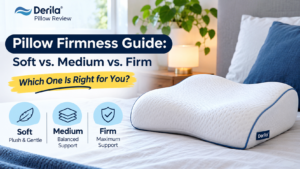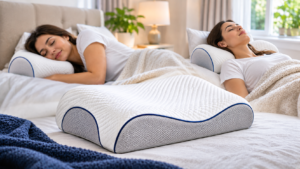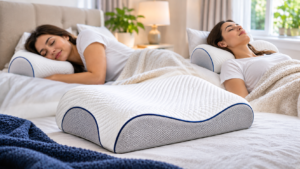
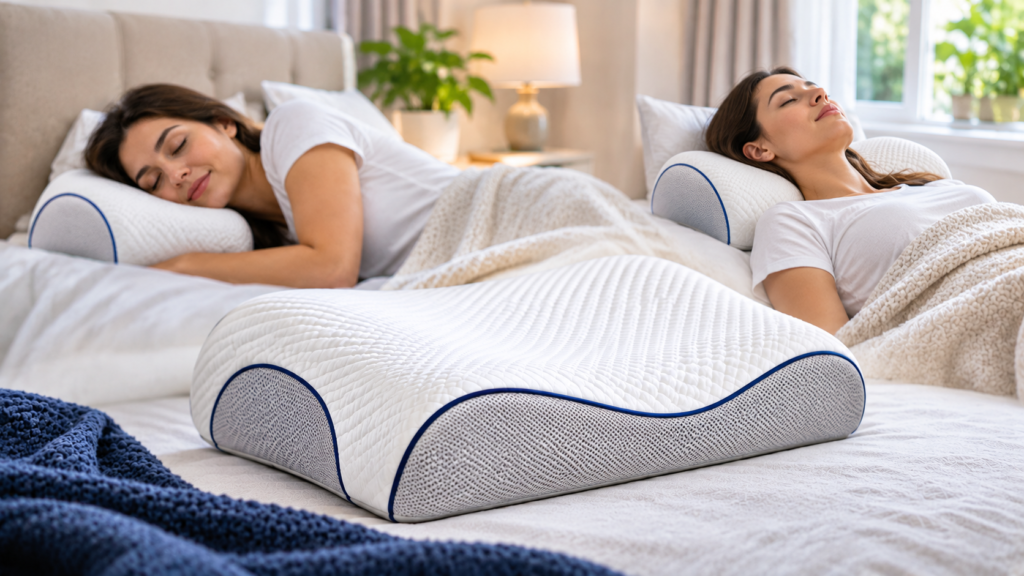
Pillow firmness affects how a pillow feels when you lie down, how much it compresses under your head and whether its height remains comfortable through the night. Labels such as soft, medium and firm can help with comparison, but they are not measured consistently across every brand. The best choice depends on your sleeping position, body proportions, mattress feel and personal preference.
This pillow firmness guide explains the differences between soft, medium and firm pillows, how to assess loft and support together, and what to check before buying a pillow in the United States. Use the manufacturer’s specifications as a starting point, then consider how the pillow fits your own sleep setup.
What Does Pillow Firmness Mean?
Firmness describes the initial feel of a pillow when pressure is applied. A soft pillow generally compresses more easily, while a firm pillow tends to resist compression. Medium-firmness options sit between those sensations, although the terms are subjective and vary by manufacturer.
Firmness is not the same as pillow height. A tall pillow can feel soft if it compresses substantially, while a thinner pillow can feel firm if its filling resists pressure. For a useful comparison, check both the stated loft and the material or construction.
Soft vs. Medium vs. Firm Pillows
| Firmness | Typical feel | What to consider |
|---|---|---|
| Soft | Compresses more readily and may feel plush | Check whether it compresses too much for your preferred sleeping position |
| Medium | Balances cushioning and resistance for some sleepers | Assess actual loft and how the pillow settles under your head |
| Firm | Resists compression and may feel more structured | Make sure it does not feel too high or create uncomfortable pressure |
These are general descriptions, not universal product standards. One brand’s medium pillow may feel different from another brand’s medium pillow, so reviews and labels should be considered alongside the actual materials and return policy.
How Sleeping Position Affects Firmness Choice
Side sleepers
Side sleepers often need enough pillow height to fill the space between the head and mattress created by the shoulder. A pillow that compresses too much may feel too low, while a very firm or high pillow may feel uncomfortable. Consider shoulder width, mattress firmness and the pillow’s compressed height rather than choosing by firmness label alone.
Back sleepers
Back sleepers may prefer a pillow that supports the head without pushing it noticeably forward. A medium-feel pillow can be a starting point for comparison, but the right option depends on head size, body proportions, mattress feel and how much the pillow compresses.
Stomach sleepers
Stomach sleepers often compare lower-profile pillows because a thick pillow can raise the head while it is turned to one side. A soft pillow may compress more, but that does not automatically make it suitable. Check the actual loft and whether the pillow feels comfortable in your normal position.
Combination sleepers
People who move between side and back sleeping should assess how the pillow feels in both positions. A pillow that seems comfortable on the side may feel too tall on the back. Consider whether the construction and shape remain comfortable when you turn.
Does Pillow Material Affect Firmness?
Yes. Filling and construction influence how a pillow compresses and recovers. Memory foam, latex, polyester fibre, down, feather and adjustable shredded fills can all have different sensations. Even within one material category, density, fill amount, cover fabric and construction can change the feel.
When comparing products, look for the actual filling composition and any available details about density, adjustability or loft. If you have sensitivities to particular materials, check the product label and care instructions before purchasing.
How to Test Whether a Pillow Is Too Soft or Too Firm
- Use your regular mattress. Mattress firmness affects how your shoulder and upper body settle, which changes the pillow fit.
- Lie in your usual sleeping position. Assess the pillow in the posture you use most often.
- Notice compression. Check whether your head sinks more than you prefer or feels held too high.
- Try your other common positions. Combination sleepers should check more than one posture.
- Review comfort without forcing alignment. A pillow should not make you strain or repeatedly adjust to find a comfortable position.
- Check the return conditions. Understand the seller’s trial, hygiene and refund rules before opening or using the product.
This is a practical comfort check, not a medical assessment. If you have persistent neck pain, numbness or other ongoing symptoms, speak with a qualified healthcare professional.
Firmness and Loft: Two Different Things to Compare
Loft refers to a pillow’s height, while firmness describes how much it resists compression. Both matter. For example, a high-loft soft pillow may compress substantially, whereas a lower-loft firm pillow may maintain more of its shape. The final fit depends on the pillow’s construction and the sleeper’s body and mattress.
For more help comparing height with sleeping position, read our guide to choosing the right pillow height. You can also review our articles about side sleepers and back sleepers.
What to Check Before Buying a Pillow in the USA
- Firmness description and whether the seller explains how it is assessed.
- Actual pillow dimensions and stated loft.
- Filling and cover materials.
- Whether the fill can be adjusted or removed.
- Care and washing instructions.
- Shipping costs, delivery estimates and seller contact details.
- Return, refund and trial conditions, including hygiene restrictions.
- Final checkout price and whether a bundle or subscription is involved.
Product specifications, prices and policies can change. Verify current details on the seller’s website before ordering and keep a copy of the product description and order confirmation.
Frequently Asked Questions
Is a firm pillow always better for neck support?
No. Firmness alone does not determine whether a pillow fits. Height, compression, shape, materials, sleeping position and mattress feel also affect comfort.
Is a soft pillow suitable for side sleeping?
It may suit some side sleepers, but check whether it compresses enough to leave the head too low. Shoulder width and mattress firmness also affect the required loft.
What is the difference between firmness and loft?
Firmness describes resistance to pressure; loft is the pillow’s height. A pillow can be high and soft or low and firm, so compare both specifications.
How do I know if my pillow is too firm?
If it feels uncomfortably hard, creates pressure or makes it difficult to settle into your normal position, reassess its firmness and height. Personal preference varies.
Should combination sleepers choose medium firmness?
Medium firmness can be one option to compare, but it is not a universal recommendation. Test the pillow in the positions you use and consider loft, compression and shape.
Final Thoughts
Choosing pillow firmness is about finding a balance between feel, loft and fit. Soft, medium and firm labels are useful starting points, but they are not standardised and do not tell the whole story. Compare the materials, dimensions, compressed feel and return conditions, then choose a pillow that feels comfortable in your normal sleeping positions.
Disclosure: This website may contain affiliate links. If you purchase through qualifying links, we may earn a commission at no additional cost to you. This does not affect the general information in this guide.