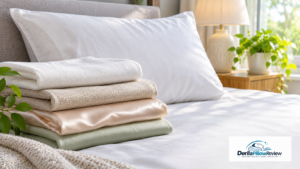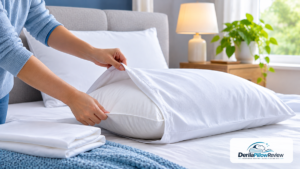
The fabric of a pillowcase affects how it feels against your skin, how it handles regular washing and how it looks on the bed. Cotton, linen, silk, satin and polyester are common options, but they differ in texture, construction, care needs and price. The best choice depends on the feel you prefer and the amount of maintenance you are comfortable with.
This guide compares popular pillowcase fabrics, explains the difference between silk and satin, and shares practical care tips for US shoppers. Always check the product’s fibre content and care label: blends and finishes can change how a pillowcase should be washed.
Common Pillowcase Fabrics at a Glance
| Fabric | Typical feel | Care considerations |
|---|---|---|
| Cotton | Soft, familiar; feel varies by weave | Often easy to launder, but follow temperature and drying instructions |
| Linen | Textured, relaxed and breathable-feeling | Can wrinkle; check shrinkage and drying guidance |
| Silk | Smooth and delicate | May require hand washing or a specific delicate cycle |
| Satin | Smooth surface with a sheen | Care depends on the fibre used to make the satin fabric |
| Polyester | Can feel smooth or crisp depending on construction | Usually low-maintenance, but avoid excessive heat when prohibited |
| Bamboo-derived viscose | Often marketed as soft and fluid | Follow the label; blends and finishes vary |
Cotton Pillowcases
Cotton is widely used for bedding because it is available in many weaves, weights and price ranges. Percale often has a crisp, matte feel, while sateen generally has a smoother surface and a subtle sheen. Thread count is only one product detail; fibre quality, yarn, weave and finishing also affect the result.
Many cotton pillowcases can be machine washed, but the correct temperature and drying method depend on the product. Check whether the fabric is pre-shrunk, coloured or blended with other fibres before choosing a wash setting.
Linen Pillowcases
Linen is made from flax fibres and is known for its distinctive texture and relaxed appearance. It often feels less smooth than sateen or silk and may soften with use and laundering. Linen naturally wrinkles, which is part of its characteristic look.
Follow the care label to reduce the risk of shrinkage or unnecessary wear. Avoid assuming that every linen blend can be washed or tumble-dried in the same way.
Silk vs. Satin Pillowcases: What Is the Difference?
Silk is a natural fibre. Satin, by contrast, describes a weave or fabric construction that creates a smooth, glossy surface; satin can be made from polyester, silk or other fibres. This means a silk pillowcase may have a satin weave, but not every satin pillowcase is made from silk.
If you are comparing products, check the fibre content rather than relying on the word “satin” alone. A polyester satin pillowcase and a silk pillowcase can have different care needs, durability and price.
Polyester and Microfiber Pillowcases
Polyester pillowcases are available at a range of price points and may be designed to feel smooth, brushed or crisp. Microfiber usually refers to very fine synthetic fibres, often polyester. These cases can be practical for everyday use, although the feel and breathability depend on the weave, weight and finishing.
Review the product description for the exact fibre composition. Use the washing and drying settings stated on the label, particularly if the fabric has a special finish or decorative trim.
Bamboo-Derived Viscose Pillowcases
Some pillowcases are made from viscose or rayon produced using bamboo as the raw material. These fabrics are often described as soft and drapey, but the final feel depends on processing, yarn and construction. Check whether the product is 100% viscose or a blend and read the manufacturer’s care directions.
Marketing terms do not replace fibre disclosure. Look for the actual composition on the label and avoid assuming that all bamboo-labelled bedding has identical properties.
How to Choose the Right Pillowcase Fabric
- Think about texture: Decide whether you prefer crisp cotton, textured linen or a smoother fabric.
- Check the fibre content: Distinguish natural fibres from synthetic fibres and blends.
- Consider laundry habits: Choose a fabric whose care requirements fit your routine.
- Check temperature guidance: Do not assume a fabric can tolerate hot washing or high-heat drying.
- Look at construction: Weave, weight, seams and closures all affect the finished product.
- Compare the full cost: Consider replacement covers, special detergents or professional cleaning if required.
How to Wash and Care for Pillowcases
- Read the care label first. Confirm the permitted wash temperature, cycle and drying method.
- Separate colours and delicate fabrics. Avoid washing delicate cases with items that may snag or abrade them.
- Use a suitable detergent. Follow the detergent instructions and avoid products prohibited by the fabric label.
- Do not overload the washer. Give the fabric room to move during washing.
- Dry as directed. Some fabrics tolerate tumble drying; others need low heat or air drying.
- Store only when fully dry. Keep clean pillowcases in a dry cupboard to help prevent musty odours.
For a practical laundry schedule, read our guide on how often to wash a pillowcase. If you use an additional protective layer, our article on pillow protectors vs. pillowcases explains how the two differ.
Choosing a Cover for a Contoured or Ergonomic Pillow
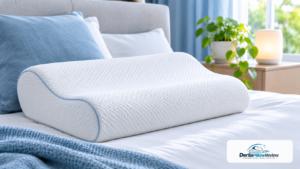
A contoured pillow may not fit a standard rectangular pillowcase properly. Check the pillow’s exact dimensions and shape, and look for a cover designed for that model where required. A case that is too tight can pull on the fabric or change how the pillow’s contours feel; a loose case may bunch up during use.
For model-specific fit information, see our Derila pillowcase size, fit and care guide. Check the pillow manufacturer’s instructions before using a third-party cover.
Frequently Asked Questions
Which fabric is best for a pillowcase?
There is no single best fabric for everyone. Cotton, linen, silk, satin and polyester have different textures, care needs and price points. Choose based on your preferences and the product’s actual fibre content.
Is satin the same as silk?
No. Silk is a fibre, while satin describes a weave or fabric construction. Satin can be made from silk or synthetic fibres such as polyester.
Are cotton pillowcases easy to wash?
Many cotton cases are machine washable, but the correct temperature and drying method vary by product. Always follow the care label.
Can I machine wash a silk pillowcase?
Some silk products allow a delicate machine cycle, while others require hand washing or specialist care. Follow the specific manufacturer’s instructions.
Can a standard pillowcase fit an ergonomic pillow?
Not necessarily. Contoured pillows can have different dimensions and shapes. Check the model’s cover guidance and measurements before buying a replacement.
Final Thoughts
Cotton, linen, silk, satin, polyester and bamboo-derived viscose each offer a different combination of texture, construction and care requirements. Compare the fibre content, weave, washing instructions and fit rather than choosing by a fabric name alone. For contoured pillows, make sure the cover is compatible with the pillow’s shape so it does not bunch or pull against the design.
Disclosure: This website may contain affiliate links. If you purchase through qualifying links, we may earn a commission at no additional cost to you. This does not affect the general information in this guide.