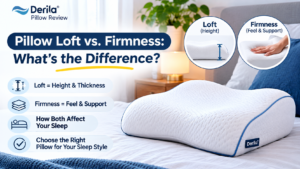
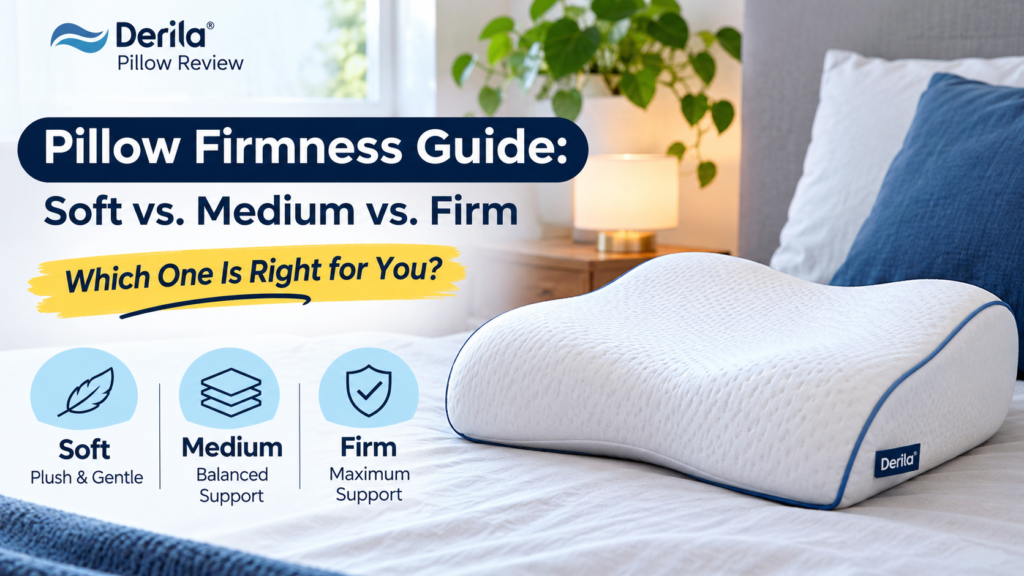
When shopping for a pillow, two terms appear again and again: loft and firmness. They are related, but they describe different things. Loft is the pillow’s height, while firmness is how much it resists compression when you rest your head on it. Understanding both can make it easier to compare products and avoid choosing a pillow based on a single label.
This guide explains pillow loft vs. firmness, how sleeping position and mattress feel affect the fit, and which specifications to check before buying in the United States.
What Is Pillow Loft?
Pillow loft refers to the height or thickness of a pillow. Product listings may describe loft as low, medium or high, or provide a measurement in inches. However, the height shown on a product page may not be the same as the height under the weight of your head. Filling type and construction affect how much the pillow compresses.
Low-loft pillows have a slimmer profile, medium-loft pillows sit between low and high profiles, and high-loft pillows are thicker. These labels are not standardised across all brands, so compare actual dimensions whenever possible.
What Is Pillow Firmness?
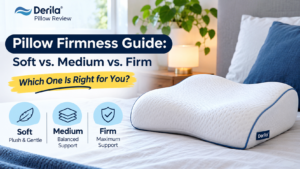
Firmness describes how strongly a pillow resists pressure. A soft pillow usually compresses more readily, while a firm pillow tends to retain more of its shape under load. Medium firmness is a broad middle category, but each manufacturer may use its own scale.
Firmness is influenced by the filling, density, fill quantity, construction and cover. Two pillows with the same loft can feel very different if one compresses substantially more than the other.
Pillow Loft vs. Firmness: Key Differences
| Factor | Loft | Firmness |
|---|---|---|
| Meaning | Height or thickness of the pillow | Resistance to compression |
| Common labels | Low, medium, high | Soft, medium, firm |
| What affects it | Fill amount, shape and construction | Material, density and construction |
| What to check | Measured height and compressed profile | Feel and how much it sinks under pressure |
| Why it matters | Influences the distance between head and mattress | Influences how the pillow cushions and holds its shape |
How Sleeping Position Influences Loft and Firmness
Side sleeping
Side sleepers often compare pillows with enough loft to fill the space between the head and mattress created by the shoulder. The required height depends on shoulder width, mattress firmness and how much the pillow compresses. A high but very soft pillow may settle lower than expected, so consider both loft and firmness together.
Back sleeping
Back sleepers may prefer a profile that supports the head without pushing it noticeably forward. The ideal combination varies with body proportions, mattress feel and personal comfort. Check the pillow’s height after compression rather than relying only on its uncompressed measurement.
Stomach sleeping
Stomach sleepers often look at lower-loft options because a thick pillow can raise the head while it is turned to one side. A soft pillow may compress more, but softness alone does not guarantee a comfortable fit. Compare the actual profile and test it in your usual position.
Combination sleeping
If you change between side and back positions, consider whether the pillow remains comfortable in both. A loft that feels suitable on your side may feel too tall on your back. Shape, compression and the ability to reposition the filling can all affect the experience.
Can a Pillow Be High Loft and Soft?
Yes. Loft and firmness are separate characteristics. A pillow can start out tall but compress significantly when you rest your head on it. Another pillow may have a lower starting height but feel firm and maintain much of its profile. This is why it helps to look for both measurements and material details.
When a seller provides only one label, such as “medium support,” ask for the pillow’s dimensions and filling information. If available, look for details about adjustability, density or how the product is intended to be positioned.
How to Compare Loft and Firmness Before Buying
- Check the dimensions. Look for the pillow’s length, width and height in the product specifications.
- Identify the filling. Foam, latex, fibre, down and adjustable shredded fill can compress and recover differently.
- Look for firmness information. Treat soft, medium and firm as descriptive labels rather than universal measurements.
- Consider your mattress. A softer mattress may allow your shoulder to settle differently from a firm mattress.
- Assess your normal sleep positions. Think about whether you mainly sleep on your side, back, stomach or change positions.
- Review the return policy. Check trial periods, hygiene restrictions and refund conditions before opening or using the pillow.
Common Pillow Buying Mistakes
- Choosing by firmness alone and ignoring pillow height.
- Assuming that a high-loft pillow will stay tall under the head.
- Comparing “medium” labels from different brands as if they use the same scale.
- Ignoring mattress firmness and shoulder width.
- Assuming one pillow profile suits every sleeping position.
- Overlooking material details, care instructions and return terms.
Related Pillow Guides
For more help, read our guide to choosing the right pillow height, compare pillow fit for side sleepers, and explore our soft vs. medium vs. firm pillow guide.
Frequently Asked Questions
Is loft the same as firmness?
No. Loft is the pillow’s height, while firmness describes how much it resists compression. Both affect how a pillow feels and fits.
Does a high-loft pillow always provide more support?
Not necessarily. A high-loft pillow may compress substantially, and support depends on construction, material, body proportions and sleeping position.
Can a soft pillow have high loft?
Yes. A pillow can be thick before use but compress significantly under the head. Check both its dimensions and how the filling behaves.
Which matters more: loft or firmness?
Neither is universally more important. The useful choice depends on your sleeping position, mattress, body proportions and comfort preferences.
How can I tell if a pillow is too high?
If it makes your head feel pushed into an uncomfortable angle or feels too tall in your usual sleeping position, reassess its loft and compressed feel. Seek professional advice for persistent pain or other symptoms.
Final Thoughts
Loft and firmness describe different aspects of a pillow, and both should be considered before buying. Compare measured height, filling, compression and your usual sleeping position rather than relying on a single marketing label. Check the seller’s current specifications and return conditions so you can make an informed decision.
Disclosure: This website may contain affiliate links. If you purchase through qualifying links, we may earn a commission at no additional cost to you. This does not affect the general information in this guide.