
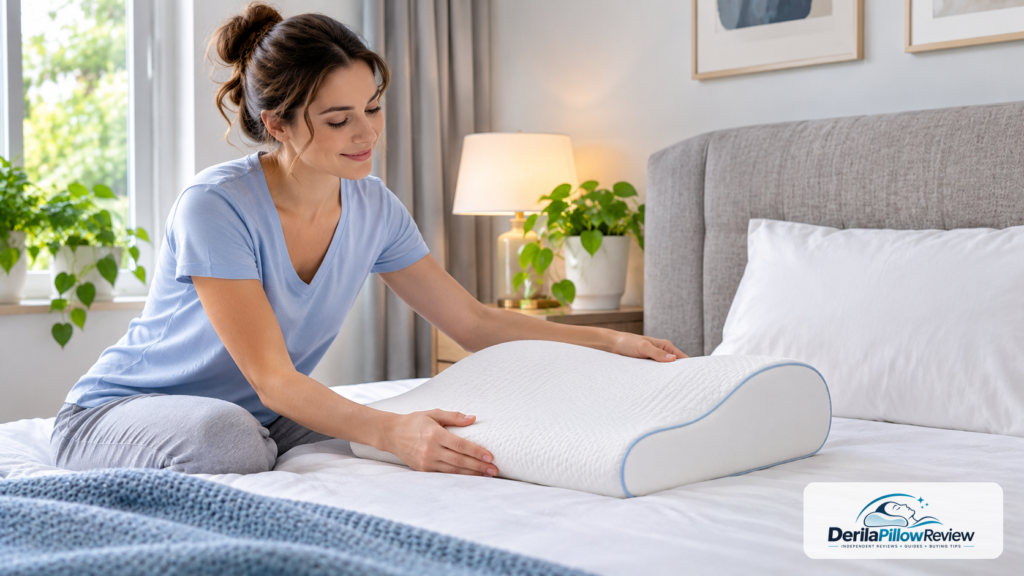
Reading in bed can be relaxing, but the pillow arrangement that feels comfortable for sleeping may not provide the same support when you are sitting upright. A pillow that is too soft may collapse behind your back, while an arrangement that is too high can leave your neck tilted forward. The goal is to create a stable, comfortable position without forcing your head, neck or shoulders into an awkward angle.
This guide explains what to look for in a pillow for reading in bed, how to arrange pillows behind your back, and which features to compare before buying. It is a general comfort guide, not medical advice or a claim that any pillow can treat pain.
What Makes a Pillow Suitable for Reading in Bed?
A reading pillow needs to do a slightly different job from a pillow used only for sleeping. When you sit up, your upper body needs support as well as your head. The most useful setup is usually stable, adjustable to your sitting position and large enough to support the areas that need contact.
- Stable support: The pillow should not collapse or slide away as you settle into position.
- Comfortable height: Its height should allow you to look at a book or screen without constantly bending your neck.
- Suitable width: A wider support surface may help accommodate your upper back and shoulders.
- Appropriate firmness: The pillow should retain its shape while still feeling comfortable against your body.
- Easy adjustment: Removable inserts, adjustable fill or a separate backrest can make it easier to change the setup.
- Practical cover: A removable, washable cover can make routine care easier, provided you follow its instructions.
Types of Pillows and Supports for Reading in Bed
Wedge pillows
A wedge pillow has an angled shape and can provide a sloped surface behind the upper body. It may suit readers who prefer a more structured incline rather than stacking several ordinary pillows. Check the wedge dimensions, angle, cover material and return terms before buying.
Reading or husband pillows
Reading pillows, sometimes called husband pillows, often have a tall back and two side arms. The arms can provide places to rest your elbows while reading. Compare the back height, arm shape, filling and overall footprint, especially if you have limited bed space.
Adjustable bed pillows
Some adjustable pillows use removable filling or inserts so you can alter their loft and shape. This can be useful when you want to experiment with the amount of support. Check whether the filling can be added or removed easily and whether replacement fill is available.
Regular bed pillows
One or two standard bed pillows may be enough for occasional reading. However, ordinary pillows can shift or flatten when placed upright against a headboard. If you use this arrangement, check that the pillows support your upper back rather than only pushing your head forward.
Contoured or ergonomic pillows
Contoured pillows are generally shaped for head and neck positioning while lying down. Their curved profile does not automatically make them suitable as a backrest for sitting upright. Consider the intended use and product instructions before choosing one for reading.
How to Set Up Pillows for Reading in Bed
- Start with back support. Sit with your lower and upper back supported by the headboard or a suitable backrest.
- Fill the gap behind you. Place a stable pillow or reading support behind your back so you are not leaning into an unsupported space.
- Check shoulder position. Your shoulders should feel relaxed rather than pushed forward by an oversized or overfilled pillow.
- Support your arms. Use side cushions or the arms of a reading pillow if they help you hold a book without shrugging your shoulders.
- Bring the book or screen up. Raise the reading material where practical instead of repeatedly dropping your chin toward your chest.
- Recheck the position. If you need to keep adjusting the pillows, change the arrangement or try a more stable support.
A setup that works for a short reading session may not remain comfortable for a long period. Change position and take breaks rather than staying fixed in one posture.
How to Choose the Right Reading Pillow
Measure the available space
Check the width of your bed and the space between the mattress, headboard and bedside furniture. Large reading pillows can take up more room than standard bed pillows, so compare the product’s actual dimensions before ordering.
Consider your usual sitting position
Some people read nearly upright, while others prefer a gentle recline. Look for a shape and height that suit the position you actually use. A steep wedge and a tall backrest create different sitting arrangements.
Compare filling and firmness
Foam, polyester fibre and shredded-fill designs can feel quite different. Product descriptions should explain the filling and whether it is adjustable. Firmness labels are not standardised across every seller, so use dimensions, construction details and return policies to make a more informed comparison.
Check the cover and cleaning instructions
A removable cover can be convenient, but it does not mean the inner cushion is washable. Read the care instructions for the cover and the insert separately. Check whether replacement covers are available.
Review returns and warranty terms
Comfort is personal, and product photographs cannot show exactly how a pillow will feel in your room. Review the seller’s trial period, return shipping costs, hygiene restrictions and warranty exclusions before purchasing.
Reading Pillow vs. Sleeping Pillow: Key Differences
| Feature | Reading support | Sleeping pillow |
|---|---|---|
| Main purpose | Support the back and upper body while sitting or reclining | Support the head and neck while lying down |
| Typical shape | Wedge, tall backrest, arms or large adjustable cushion | Rectangular or contoured head pillow |
| Position | Behind the torso or around the sides | Under the head and neck |
| Key fit checks | Back height, width, incline and stability | Loft, firmness, shape and sleep position |
| Use | Reading, relaxing or sitting up in bed | Night-time sleep or resting while lying down |
Some products can be used in more than one position, but do not assume a sleeping pillow will work well as a backrest. Check the intended use stated by the manufacturer.
Common Reading-in-Bed Pillow Mistakes
- Stacking too many pillows: A tall stack can shift and may push your head forward.
- Supporting only the head: If the torso is unsupported, your neck and shoulders may compensate.
- Choosing by appearance alone: Product dimensions and construction matter more than styling photographs.
- Ignoring bed size: A large reading pillow may leave little room for other bedding.
- Assuming all foam is the same: Foam density, shape and construction affect how a product feels.
- Overlooking care details: Check whether the cover and inner cushion have different cleaning requirements.
Related Pillow Guides
If you are comparing pillows for sleeping as well as reading, these guides explain some of the main fit factors:
- How to choose the right pillow height for your sleep position
- Pillow firmness: soft vs. medium vs. firm
- Pillow loft vs. firmness: what is the difference?
- Common US pillow sizes and dimensions
Frequently Asked Questions
What type of pillow is best for reading in bed?
A wedge pillow or a reading pillow with a tall back may provide more stable upper-body support than a standard bed pillow. The right choice depends on your preferred recline, bed space and comfort preferences.
Can I use normal bed pillows to sit up in bed?
Yes, for some short sessions. However, ordinary pillows may shift or flatten when stacked upright. Check that your back and shoulders are supported and that your head is not pushed forward.
Are wedge pillows good for reading?
A wedge can create a steady incline behind the upper body. Compare its height, angle, width and firmness, and make sure the position feels comfortable for your intended use.
Is a contoured neck pillow suitable for reading?
Not necessarily. Many contoured pillows are designed for use while lying down. Check the manufacturer’s intended-use guidance rather than assuming the shape is suitable as a sitting backrest.
How can I avoid neck strain while reading in bed?
Use a setup that supports your back, keep your shoulders relaxed and raise your reading material where practical. Change position and take breaks. If you have persistent or worsening neck symptoms, seek advice from a qualified healthcare professional.
Final Thoughts
A comfortable reading setup needs more than a pillow under your head. Consider a stable backrest or wedge, enough room for your shoulders, a suitable incline and a position that lets you read without repeatedly bending your neck. Compare dimensions, filling, cover care and return terms before buying. Most importantly, adjust your position and take breaks rather than expecting one pillow arrangement to suit every session.
Disclosure: This website may contain affiliate links. If you purchase through qualifying links, we may earn a commission at no additional cost to you. This does not affect the general information in this guide.